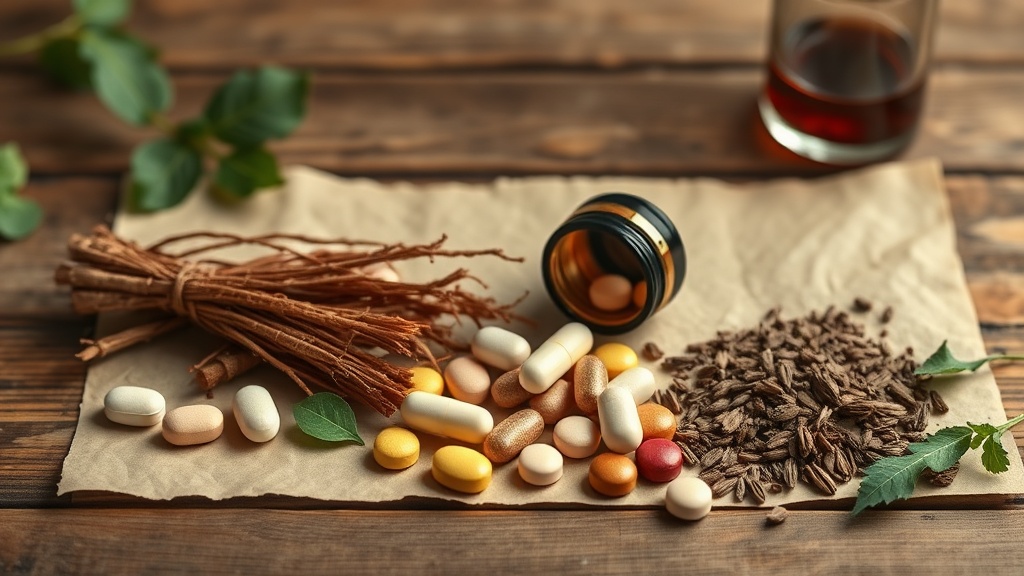
Side-by-Side Actives
When we examine multivitamin formulations alongside adaptogenic herbs such as Panax ginseng and Withania somnifera (ashwagandha), the fundamental difference lies in their intended mechanism. A standard multivitamin provides a broad spectrum of micronutrients—vitamins A, C, D, E, K, B-complex, plus minerals like zinc, magnesium, and selenium—at doses intended to fill dietary gaps and support general metabolic function. In contrast, adaptogens are bioactive plant compounds that modulate the hypothalamic-pituitary-adrenal (HPA) axis and stress response. Panax ginseng contains ginsenosides (e.g., Rb1, Rg1) that have been studied for cognitive performance and immune modulation (Lee ST et al., 2015, PMID 25952952). Ashwagandha's active constituents, withanolides (notably withaferin A), are associated with reductions in cortisol and perceived stress (Chandrasekhar K et al., 2012, PMID 23439798). Other adaptogens like Rhodiola rosea (salidroside), Eleutherococcus senticosus (eleutherosides), and Schisandra chinensis (schisandrins) each have distinct phytochemical profiles. A multivitamin does not contain these compounds; instead, it supplies the cofactors necessary for neurotransmitter synthesis and adrenal function. For example, vitamin B6, magnesium, and zinc are required for dopamine and GABA production, while vitamin C and B5 support adrenal steroidogenesis. Thus, the actives are complementary rather than overlapping.
Use-Case Differences
The choice between a multivitamin and an adaptogen depends on the clinical context. In our experience, a multivitamin is appropriate for patients with poor dietary intake, restrictive diets, or increased nutrient demands (e.g., pregnancy, aging, chronic illness). It is a foundational supplement for preventing deficiency. Adaptogens, on the other hand, are selected for specific stress-related complaints. Panax ginseng is traditionally used in Chinese medicine for qi deficiency and fatigue; it has been studied for improving mental performance under stress (Reay JL et al., 2005, PMID 16011495). Ashwagandha is used in Ayurveda for vata imbalance and nervous exhaustion; clinical trials show it reduces anxiety and improves sleep quality (Langade D et al., 2019, PMID 31586360). Rhodiola is favoured for burnout and physical endurance. We note that adaptogens are not a substitute for a multivitamin—they do not provide essential nutrients. Conversely, a multivitamin does not directly modulate the stress response. Patients with both nutritional inadequacy and stress may benefit from both, but the primary use-case differs.
Stacking Guidance
We often see patients combining multivitamins with adaptogens, and this can be rational if done carefully. A high-quality multivitamin provides the micronutrient foundation that supports adrenal and neurotransmitter function. For example, vitamin C and pantothenic acid are cofactors for cortisol synthesis; magnesium and B6 are needed for GABA production. Adding an adaptogen like ashwagandha (300–600 mg of a root extract standardised to 5% withanolides) can further modulate cortisol. However, we caution against stacking multiple adaptogens without understanding their individual effects. Panax ginseng (200–400 mg of extract standardised to 4–7% ginsenosides) can be stimulating and may interfere with sleep if taken late in the day. Ashwagandha is generally calming and often taken before bed. Rhodiola (200–400 mg of 3% rosavins) is best taken in the morning. We recommend starting with one adaptogen alongside a multivitamin, monitoring response for 4–6 weeks, and avoiding concurrent use with other stimulants or sedatives without professional guidance. Drug interactions are discussed below.
When to Choose Which
We advise a multivitamin as the first-line supplement for anyone with a documented or suspected nutrient deficiency, or as a general insurance policy for those with suboptimal diets. It is not a treatment for any condition. Adaptogens should be chosen when the primary complaint is stress, fatigue, or cognitive decline that is not explained by nutrient deficiency. For example, a patient with low energy and poor diet should start with a multivitamin; if energy remains low after 8 weeks, an adaptogen like Panax ginseng may be added. A patient with high stress and anxiety but adequate diet may benefit from ashwagandha alone. We also consider safety: multivitamins are generally safe, but fat-soluble vitamins (A, D, E, K) can accumulate. Adaptogens have more specific contraindications (see below). In summary, choose a multivitamin for nutritional gaps; choose an adaptogen for stress modulation; combine them when both issues are present, with careful attention to dosing and timing.
Dosage and Quality Considerations
Dosage specifications are critical for both categories. For multivitamins, we look for formulations that provide 100–200% of the UK Reference Nutrient Intake (RNI) for most vitamins and minerals, with the exception of iron (for premenopausal women) and calcium (often separate due to bulk). We prefer methylated forms of B12 (methylcobalamin) and folate (5-MTHF) for better absorption. For adaptogens, standardised extracts are essential. Ashwagandha: 300–600 mg of root extract standardised to 5% withanolides, taken once or twice daily. Panax ginseng: 200–400 mg of extract standardised to 4–7% ginsenosides, taken in the morning. Rhodiola: 200–400 mg of 3% rosavins and 1% salidroside. We caution against raw herb powders, which vary in potency. Quality markers include third-party testing for heavy metals and microbial contaminants, and certificates of analysis (COA) confirming active compound levels. GMP certification is a baseline. For multivitamins, look for brands that disclose the form of each nutrient and avoid proprietary blends that hide individual doses.
Drug Interactions and Contraindications
Multivitamins can interact with medications primarily through mineral competition. For example, calcium and magnesium can chelate tetracycline antibiotics, reducing absorption; we advise separating doses by at least 2 hours. Vitamin K can antagonise warfarin, so patients on anticoagulants should maintain consistent intake. Adaptogens have more pronounced interactions. Panax ginseng may inhibit CYP3A4 and CYP2D6, potentially increasing levels of drugs like warfarin, statins, and antidepressants (Gurley BJ et al., 2005, PMID 15858852). It also has antiplatelet effects and should be avoided with anticoagulants. Ashwagandha may enhance GABAergic activity and potentiate benzodiazepines or barbiturates, causing excessive sedation. It also increases thyroid hormone levels, so patients on levothyroxine should monitor thyroid function. Rhodiola may inhibit MAO-A and MAO-B at high doses, posing a risk with MAO inhibitors. We always recommend that patients disclose all supplements to their healthcare provider.
Sourcing and Quality Markers
For multivitamins, we prioritise brands that provide full disclosure of ingredient sources and third-party testing. Look for assays confirming vitamin and mineral levels within 10% of label claim. For adaptogens, sourcing is paramount. Ashwagandha should be from root (not leaf) and standardised to withanolides. Panax ginseng should be from 4–6 year old roots; older roots have higher ginsenoside content. We recommend products with a COA from an independent lab (e.g., Eurofins, SGS) showing active compound levels and absence of contaminants. GMP certification is non-negotiable. Avoid products that do not specify the part of the plant used or the extraction ratio. For example, a 10:1 extract means 10 kg of raw herb yields 1 kg of extract, indicating concentration. We also check for adulteration: ashwagandha is sometimes adulterated with other Solanaceae species; DNA barcoding can verify authenticity.
Frequently Asked Questions
Can I take a multivitamin and ashwagandha together?
Yes, they are generally safe together. The multivitamin provides nutrients that support adrenal function, while ashwagandha modulates cortisol. We recommend taking ashwagandha in the evening if it causes drowsiness, and the multivitamin with a meal.
Which adaptogen is best for energy?
Panax ginseng is traditionally used for fatigue and has evidence for improving mental and physical performance. Rhodiola rosea is also used for stress-related fatigue. We suggest trying one at a time and monitoring response.
How long does it take for adaptogens to work?
Adaptogens typically require 2–4 weeks of consistent use to show effects, though some individuals notice changes sooner. We advise a trial of at least 4 weeks before evaluating efficacy.
Are there any side effects of adaptogens?
Yes. Panax ginseng can cause insomnia, headache, and gastrointestinal upset. Ashwagandha may cause drowsiness, thyroid elevation, and gastrointestinal issues. Rhodiola can cause dizziness and dry mouth. We recommend starting with the lowest effective dose.
Should I choose a multivitamin with adaptogens included?
We generally prefer separate supplements to allow flexible dosing. Combination products often contain subtherapeutic levels of adaptogens. If you choose a combined product, verify that the adaptogen dose is within the studied range.
Can adaptogens replace a multivitamin?
No. Adaptogens do not provide essential vitamins and minerals. They are complementary, not substitutes. A multivitamin addresses nutritional gaps; adaptogens modulate stress pathways.
Where to try it. If you want to source what we have described in this article, an example UK Multivitamin option is the option we point readers to. This site is published by Vitadefence Ltd; we disclose that here.